
what is the difference between recipe and standardized recipe

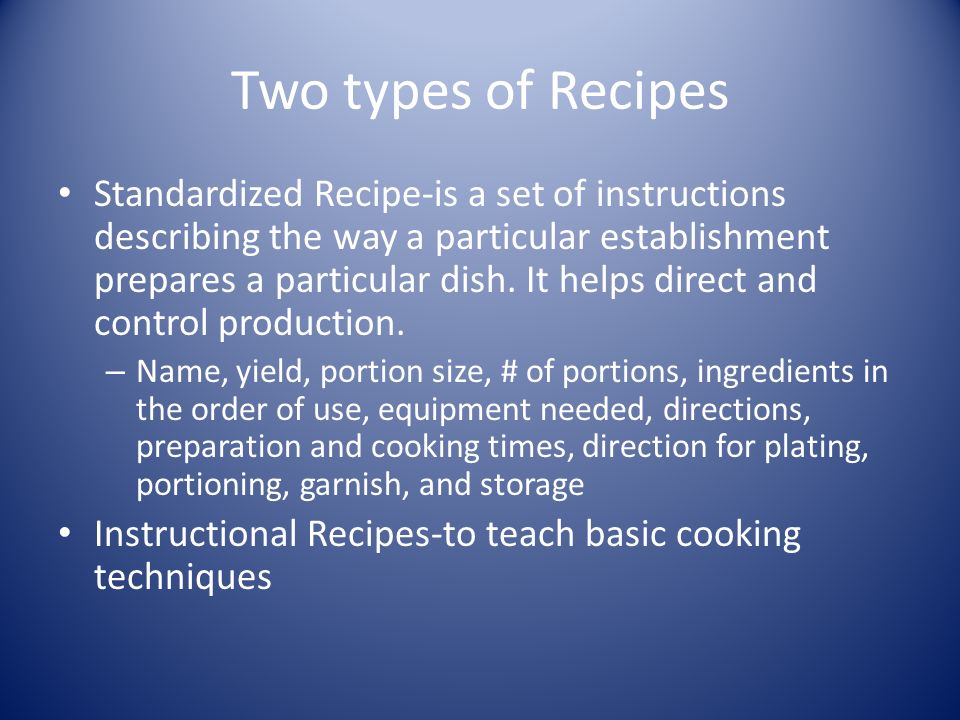
A recipe is a set of instructions for preparing a specific dish, while a standardized recipe is a recipe that has been tested, evaluated, and adjusted to ensure consistent results. Cooking is an artform that requires a combination of creativity and precision.
Whether you’re a professional chef or a home cook, having a recipe is essential for recreating a delicious dish. But not all recipes are created equal. In the culinary world, there is a clear distinction between a recipe and a standardized recipe.
While a recipe provides general instructions for preparing a dish, a standardized recipe goes a step further by providing precise measurements, techniques, and ingredient lists that have been thoroughly tested and adjusted for consistent results. We will explore the key differences between these two types of recipes and the benefits of using standardized recipes in the kitchen.
Credit: slideplayer.com
Key Components
Understanding the key components of a recipe versus a standardized recipe can help in creating delicious dishes consistently.
Flexibility Of Ingredients
A recipe often allows for flexibility in ingredient choice and quantity, catering to individual tastes and preferences.
Precision In Measurements
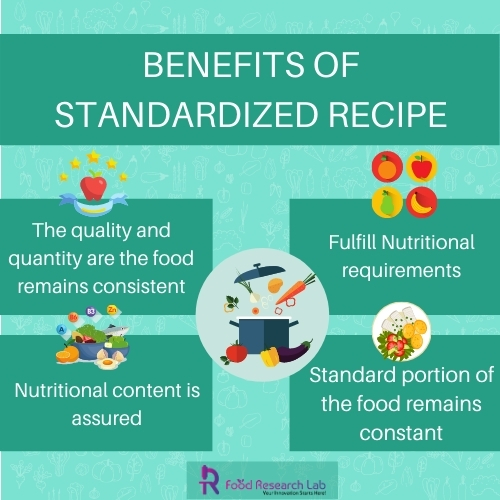
A standardized recipe thrives on precision in measurements, ensuring consistency in flavor and texture.
Credit: www.foodresearchlab.com
Purpose And Audience
Home cooks typically use recipe as a general guideline.
Usage In Commercial Kitchens
In commercial kitchens, standardized recipe provides consistency.
Consistency And Reproducibility
Consistency refers to the uniformity in the preparation of a dish while reproducibility ensures the possibility of replicating the same dish multiple times. A recipe provides general instructions, while a standardized recipe offers precise measurements and methods, crucial for consistent results in commercial settings.
Varying Results In Recipes
When it comes to cooking, we often rely on recipes to guide us through the process. However, even with a well-written recipe, there can be variations in the results. These variations can be attributed to factors such as the skills of the cook, the quality of ingredients, and the equipment used.
Cooking is an art, and each person has their own unique style and taste preferences. This means that even if two people follow the same recipe, the end result may still differ. While this can lead to exciting culinary experiments and the discovery of new flavors, it can also be frustrating when you are trying to recreate a specific dish with consistent results.
Consistency In Standardized Recipes
Standardized recipes, on the other hand, offer a solution to the issue of varying results. These recipes are meticulously tested and formulated to provide consistent outcomes each time they are used. They are developed with precise measurements, standardized techniques, and specific instructions that leave little room for interpretation.
Standardized recipes are particularly important in commercial kitchens and food production settings where consistency and reproducibility are crucial. These recipes ensure that every dish is prepared exactly the same way, regardless of who is doing the cooking. This allows establishments to create a brand identity and build a loyal customer base by delivering consistent, high-quality food.
Ensuring Consistency And Reproducibility
To achieve consistency and reproducibility in recipes, several factors come into play. Here are some key elements to consider:
1. Measurements: Standardized recipes often specify precise measurements, such as grams, milliliters, or ounces. These measurements eliminate guesswork and promote accuracy in ingredient quantities.
2. Techniques: Standardized recipes provide detailed instructions on how to prepare and cook each dish, including specific techniques such as chopping, slicing, and sautéing. These techniques ensure that each step is performed consistently.
3. Ingredients: Standardized recipes list the exact ingredients and their quantities in order to achieve a specific flavor profile. Using the prescribed ingredients helps maintain consistency in taste and texture.
4. Equipment: Standardized recipes may include specifications for the type of equipment or cookware to use. This is important as different equipment can have varying heat distributions and cooking times, which can impact the final result.
5. Testing and Adjustments: Standardized recipes are often tested multiple times to ensure accuracy and consistency. However, it is important for cooks to taste and adjust the seasoning as per their personal taste preferences before serving.
In conclusion, while traditional recipes allow for creativity and personalization, standardized recipes provide consistency and reproducibility in the culinary world. By adhering to precise measurements, techniques, ingredients, and equipment, standardized recipes ensure that each dish is prepared with accuracy, offering consistent results time after time.
Nutritional Aspects
In discussing the nutritional aspects of recipes and standardized recipes, it’s essential to consider the varying levels of control and precision in providing nutritional information. This comparison sheds light on how each type of recipe affects the nutritional content of a dish.
Nutritional Information In Recipes
In regular recipes, the nutritional information is often provided in a more general manner. It usually includes the main components like calories, fat, protein, and carbohydrates. However, the specific measurements and nutritional values can vary based on ingredients and personal interpretations, resulting in potential discrepancies.
Controlled Nutritional Content In Standardized Recipes
Standardized recipes, on the other hand, provide a precisely controlled nutritional content. They offer accurate measurements and detailed nutritional information, ensuring consistency in the dish’s health-related aspects.
Adaptability And Scale
When it comes to cooking, understanding the difference between a recipe and a standardized recipe is crucial. One key aspect to consider is the adaptability and scale of these two types of recipes. Let’s delve into how each one approaches Adjustments in Recipes and Uniformity in Scale for Standardized Recipes.
Adjustments In Recipes
- Standard recipes allow for flexibility in ingredient quantities.
- Recipes can be adjusted based on personal preferences.
- Changes in portion size can be made without affecting the overall dish.
Uniformity In Scale For Standardized Recipes
- Standardized recipes maintain consistency across batches.
- Ingredients and measurements are precise for accurate results.
- Scaling a standardized recipe ensures uniform cooking outcomes.

Credit: foodcentral.wordpress.com
Quality Control And Testing
Quality Control and Testing: Ensuring consistency and accuracy in recipes is vital for culinary success. Quality control and testing play a crucial role in maintaining the integrity of recipes.
Testing Of Recipes
Before finalizing a recipe, rigorous testing is conducted to evaluate its taste, presentation, and consistency. Testers provide feedback for further refinement.
Quality Control Measures In Standardized Recipes
Standardized recipes adhere to strict quality control measures to guarantee uniformity in taste, appearance, and portion size across multiple preparations.
Conclusion
Understanding the difference between a recipe and a standardized recipe is crucial for any cooking enthusiast. While a recipe is a general guideline for preparing a dish, a standardized recipe provides specific measurements and procedures. By recognizing these distinctions, chefs can ensure consistency and accuracy in their culinary creations.
Embracing these concepts will undoubtedly elevate your cooking skills and results!
